
Key Takeaways
-
Our 2026 food pulse results reveal how consumers use AI for meal planning, recipe discovery and personalization—and why it matters for food and beverage brands.
-
Our 2026 food pulse results reveal how consumers use AI for meal planning, recipe discovery and personalization—and why it matters for food and beverage brands.
-
Our 2026 food pulse results reveal how consumers use AI for meal planning, recipe discovery and personalization—and why it matters for food and beverage brands.
-
Our 2026 food pulse results reveal how consumers use AI for meal planning, recipe discovery and personalization—and why it matters for food and beverage brands.
In kitchens across the nation, consumers are increasingly turning to artificial intelligence (AI) tools for recipe list generation and meal planning. Social media remains the dominant source for meal inspiration – for now. These are among the findings in our Spring 2026 MorganMyers Food Pulse, a quarterly snapshot for food and beverage marketers on how consumers are discovering, planning and preparing food today. Not only does this research uncover how consumers use AI for meal planning, it reveals a new playbook marketers can follow to better reach consumer audiences through digital channels and grow product sales in 2026 and beyond.
Social Media Is the Top Search Engine for Recipes
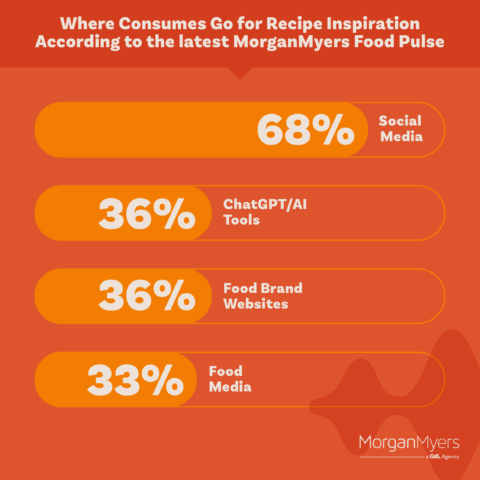
Last month, we surveyed consumers nationally on which channels use to discover new recipe ideas. Our survey results revealed:
- 68% of consumers turned to social media for recipe ideas
- 36% used ChatGPT/AI tools
- 36% turned to food brand websites
- 33% found via food media
When asked to name the one source they used most often, 42% cited social media, while 13% pointed to AI tools. Food brand websites, food media, physical cookbooks, friends and family and all other sources came in under 10%.
How Food Marketers Can Drive Recipe Inspiration on Social Media
These findings clearly underscore that social media remains the search engine for recipe inspiration, and food marketers should continue to feed social feeds with dynamic, inspiring yet simple recipes – whether its original content, via influencers or shared from other credible sources. That said, just as equally intriguing: AI has quickly leap-frogged all other sources – from brand sites to food media – as the secondary source for recipe discovery, and it’s only gaining momentum.
Consumers Rely on AI for Meal Planning
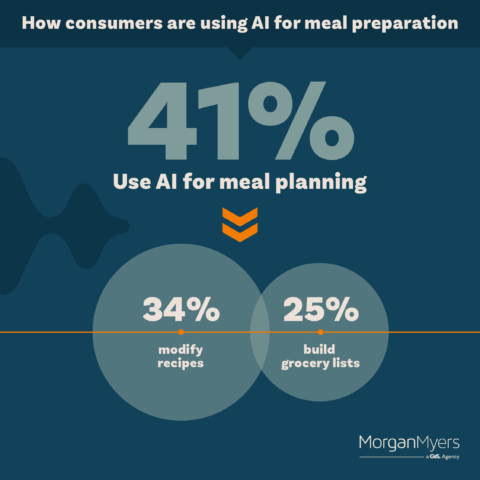
Once the consumer decides the recipe, where do they go to plan the meal? This is where the shift to AI really starts to play out. In the past month:
- 41% of consumers used ChatGPT or other AI powered tools for meal planning
- 34% used ChatGPT or other AI tools to modify a recipe
- 25% used ChatGPT or other AI tools to generate a grocery list
When it comes to recipe modification, 22% cited ingredient availability as the primary reason, followed by health goals (17%) and dietary preferences such as low-carb or GLP-1 usage (15%).
While social media still leads in inspiration, AI is increasingly becoming the tool consumers rely on to actually plan and execute meals that align with ingredients they already have at home, budget, health goals and dietary restrictions.
How Can Brands Ensure Their Products Show up in AI Meal Planning Tools & Large Language Models (LLMs)?
The insight for food and beverage marketers is clear: maintain your strength on social media, but invest just as aggressively on how you show up on LLMs.
Is your recipe site content optimized for LLM discovery? Is your earned media showing up in the sources AI tools pull from? Are you positioning yourself for trending dietary swaps like replacing sour cream with Greek yogurt or cottage cheese for more protein? These are the factors that will determine who wins as AI becomes central to meal planning, decision-making and ingredient modification.
Take the next step in AI recipe discoverability: Learn how to optimize your website for AI-powered search in our recent GEO best practices guide.
Consumers Prefer to Digest Recipes Through Video
Once consumers finish their grocery shopping and meal planning, how do they prefer to prep? One format clearly edges out:
- 49% of consumers prefer watching video to learn how to make a recipe, either exclusively or paired with written recipes
- 43% of consumers only want written recipes
- 82% of respondents say it’s somewhat or very important to see the dish prepared visually when trying a new recipe
As to where consumers prefer to go for their food video content:
- 46% of consumers cite YouTube as their primary source for recipe how-to videos
- 20% of consumers go to TikTok for digestible recipe videos
- 13% of consumers turn to Instagram Reels for recipe video content
While the race for inspiration and planning is increasingly split between social and AI, video remains the preferred format for how consumers discover and learn about meal preparation and how to make recipes.
How to Make Consumers Hungry for Your Products Using Video
For food brands, a strong video strategy –– whether built in-house, supported by influencer partnerships, or both –– is a now table stakes. As consumers increasingly rely on video to learn how to cook recipes and streamline meal prep, brands must invest in product-forward recipe content that meets consumers at the moment of decision. The most effective recipe videos show the product in use, make it look appealing and craveable, and break preparation into easy-to-follow steps –– while highlighting the outcomes that matter most, from presentation and taste to health benefits and versatility.
The opportunity is twofold: Inspire confidence in the recipe and make product choice feel effortless. Brands that translate these insights into intentional video strategies will be best positioned to drive product trial, repeat purchase and brand loyalty.
The New Food Discovery Model for Food Marketers
For food and beverage marketers, our spring Food Pulse reveals a new food discovery funnel they should be following. Social drives inspiration, AI enables planning and personalization and video drives preparation in the kitchen.
Brands that show up across all three will be the ones that win today’s consumer.
About the MorganMyers Quarterly Food Pulse
The MorganMyers Food Pulse is a quarterly snap survey series capturing real-time consumer behaviors shaping how America plans, prepares and experiences food. Designed for speed and relevance, Food Pulse delivers timely insights to food and beverage marketers on cultural shifts, platform influence and purchase drivers, equipping brands to act on what’s happening now. We conducted this nationally representative online survey in March 2026 with 366 consumers and a margin of error of +/- 5%. What more info behind this quarter’s survey? Contact Eric Davis, Vice President, Food & Beverage, MorganMyers at edavis@morganmyers.com.
For deeper analysis, we also produce annual Food & Flavor Trends Report, a strategic playbook for food marketers that identifies emerging and enduring flavor trends, paired with research-backed insights to help turn trending flavors into everyday staples. Download your copy.