
The New Rules of Gen Z Influence: Summer 2026 Food Pulse Insights
The New Rules of Gen Z Influence: Summer 2026 Food Pulse Insights
As food and beverage marketers build their 2027 plans, one thing is becoming increasingly clear: the old playbook for influencing Gen Z is losing effectiveness.
The Summer 2026 MorganMyers Food Pulse found that social media remains one of the most powerful drivers of food and beverage discovery, but trust is shifting away from celebrity influencers and toward authentic creators, experts and everyday consumers.
The implication for food brands is significant. Success in 2027 will not come from simply showing up in feeds. It will come from earning recommendations from people Gen Z consumers already trust.
Nearly three-quarters of Gen Z consumers, 73%, say they have repeatedly purchased a food or beverage product they first discovered on social media. Yet when it comes to what actually influences purchase decisions, personal recommendations consistently outrank influencer endorsements.
The brands best positioned for growth will build strategies that combine social visibility with credibility, product quality and shareable consumer experiences.
Food Marketing on Social Media Is Driving Gen Z Discovery
Social platforms have become a primary source of food and beverage discovery for Gen Z consumers. When asked which channels have the greatest influence on discovery and purchases, respondents ranked TikTok, Instagram and YouTube well ahead of Google Search, Facebook, Snapchat, Pinterest, food and recipe websites and AI tools such as ChatGPT.
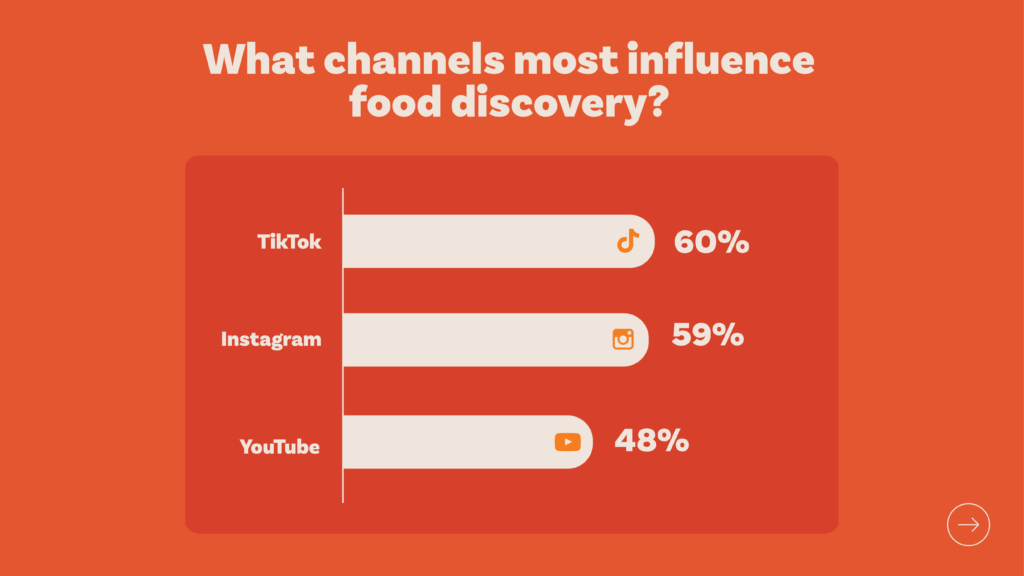
- 60% of respondents say TikTok influences food and beverage product discovery and purchases.
- 59% of respondents cite Instagram as an initial source of food and beverage product discovery.
- 48% of respondents point to YouTube as a key source of food and beverage product discovery.
Social media also translates into sustained purchasing behavior. Thirty-four percent of respondents say they have repeatedly purchased products they discovered through social media many times, while another 39% have done so a few times. Only 10% say they have never repeatedly purchased a product first found through social media.
What Are the Best Platforms for Gen Z Food Marketing on Social Media?
For brands trying to reach Gen Z, the best platforms for food marketing on social media are TikTok, Instagram and YouTube. Each platform can play a different role in the consumer journey: TikTok for discovery and trend momentum, Instagram for visual appetite appeal and creator content, and YouTube for longer-form storytelling, recipe content and product education.
What this means for food brands: Social media should not be treated as a single channel. Brands should match content formats to platform behavior, from short product-forward videos and creator-led taste tests to recipe demonstrations and customer content that makes the product easy to imagine, try and share.
Can Social Media Impact Food Choices and Consumer Behavior?
Yes. The Summer 2026 Food Pulse shows that social media can influence what Gen Z discovers, tries and repurchases. However, the research also points to a critical distinction for marketers: social media can create the first purchase, but taste, value and quality determine whether there is a second.
When asked what most determines whether they purchase a food or beverage product, respondents ranked price and value first at 27%, narrowly ahead of taste at 26%. Recommendations from someone they trust followed at 17%, while health and nutrition benefits ranked at 13%.
After the first purchase, product fundamentals matter even more. Sixty-eight percent identify taste as one of the leading reasons they buy a product again, followed by price and value at 61% and quality at 44%. Social media buzz ranked at just 3%.
What this means for food brands: A strong creator strategy can open the door. The product still has to close the sale. Campaigns should make the product look craveable, but the experience must deliver once consumers bring it home.
How Does Social Media Influence Food Trends Today?
Social media influences food trends today by accelerating discovery, making products more visual and giving consumers more voices to learn from before they buy. Gen Z consumers are not only watching brand content. They are also watching friends, family, creators, reviewers and experts explain what products are worth trying.
Nearly seven in 10 respondents, 68%, say recommendations from friends and family influenced them to try a new food or beverage product in the past month. TikTok posts followed at 52%, Instagram posts at 44%, price or promotion at 22% and health or nutrition benefits at 17%. Influencer or creator recommendations ranked at 12%.
Friends and family also rank as the most trusted source when deciding whether to purchase, at 48%. Registered dietitians and nutrition experts rank second at 12%, followed by everyday customer reviews at 9% and social media influencers at 8%.
What this means for food brands: The most important influencer may not always be the person with the largest following. Sometimes it is the friend who sends a link and says, “You have to try this.” Brands cannot control that conversation, but they can create products, content and experiences that give consumers a reason to start it.
Influencer Marketing Statistics Show Bigger Is Not Always Better
One of the most revealing findings in this quarter’s research challenges a common assumption in food influencer marketing: more followers do not automatically mean more influence.
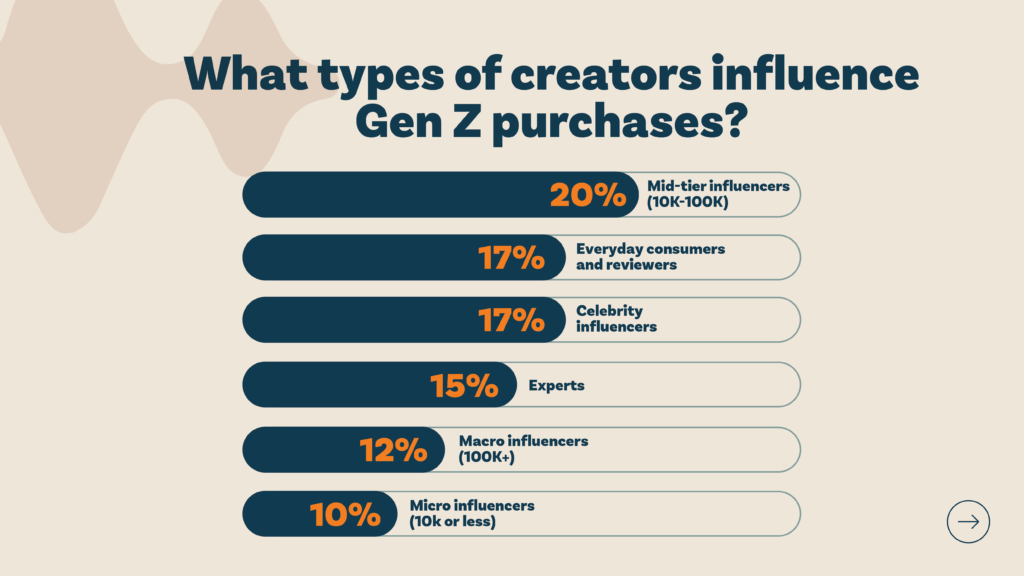
When asked which type of influencer is most likely to affect food and beverage purchases, respondents ranked mid-tier influencers with 10,000 to 100,000 followers highest at 20%. Everyday consumers and reviewers followed at 17%, alongside celebrity influencers at 17%. Subject matter experts such as chefs and dietitians ranked at 15%, followed by macro influencers with more than 100,000 followers at 12% and micro influencers at 10%.
Trust follows a similar pattern. Mid-tier influencers and everyday consumers and reviewers each earned approximately 20%, ranking ahead of celebrity influencers at 15%, subject matter experts at 14%, macro influencers at 11% and micro influencers at 10%.
How Do Influencer Marketing Statistics Vary Across Different Social Media Platforms?
The Summer 2026 Food Pulse shows that platform influence varies, with TikTok, Instagram and YouTube leading Gen Z food discovery and purchase influence. The survey also shows that influencer impact varies by creator type, with mid-tier influencers and everyday consumers earning stronger influence and trust than celebrity, macro and micro influencers.
However, the survey does not directly measure influencer performance by platform. Based on the findings, the clearest action for marketers is to pair platform selection with creator fit: use TikTok, Instagram and YouTube to drive discovery, then prioritize creators who genuinely use the product, can explain why they like it and feel credible to their audiences.
What this means for food brands: Celebrity partners can still build awareness, but food brands should surround that reach with credible mid-tier creators, experts and real consumers who can show how a product fits into everyday life.
Effective Strategies for Food Brands to Promote Themselves on Social Media
The most effective strategies for food brands to promote themselves on social media are rooted in credibility, not just visibility. Gen Z consumers understand how influencer marketing works. Paid partnerships are not automatically a problem, but the creator, product and content must fit together naturally.
When asked what makes an influencer recommendation more likely to affect a purchase, half of respondents, 50%, say it matters that the creator actually uses the product. Honesty ranks second at 42%, followed by content that feels authentic at 41%. One-third say the product itself needs to look good, while 32% want creators to explain why they like it.
Gen Z consumers are equally clear about what weakens a recommendation. Fifty-eight percent say they are less likely to be influenced when they suspect a creator was paid to promote the product, while half point to content that feels fake or overly polished. Forty-two percent are wary of influencers who promote too many products.
What this means for food brands: Do not over-script creator content. Build partnerships with people who already have a natural reason to use the product, then give them room to create content that feels useful, honest and true to their audience.
Practical next steps for social media planning:
- Invest in TikTok, Instagram and YouTube content that makes products visually compelling and easy to understand quickly.
- Prioritize creators who genuinely use the product and can explain why it belongs in their lives.
- Pair celebrity reach with mid-tier creators, subject matter experts and everyday voices when budget allows.
- Use registered dietitians, chefs or nutrition experts when a product delivers meaningful health or nutrition benefits.
- Create experiences consumers naturally want to share with friends and family.
- Elevate real customer content across social, web, retail and email channels.
- Keep product fundamentals front and center: taste, value and quality are what earn repeat purchases.
Real Customer Content Makes Food Brands Feel More Authentic
Authenticity extends beyond influencer marketing. When asked what makes a food or beverage brand feel authentic, Gen Z consumers ranked real customer content first at 48%, followed by transparent ingredients or sourcing at 43%. Product quality matching expectations ranked at 27%, while humor or personality and clear brand values each ranked at 26%. Natural-feeling creator partnerships followed at 24%.
Gen Z consumers say misleading health claims, 49%, overpriced products, 47%, and poor quality, 47%, are the leading reasons they distrust a food or beverage brand. Nearly one-third point to influencer partnerships that feel fake.
What this means for food brands: Customer reviews, recipe creations, social posts and product experiences often carry more credibility than traditional brand messaging alone. When consumers can see real people using and enjoying a product, trust increases.
Your new Gen Z marketing roadmap is clear: Social gets Gen Z to discover it, friends and family keep them using it, but taste will always keep them coming back.
About the Summer 2026 MorganMyers Food Pulse
The MorganMyers Food Pulse is a quarterly consumer research series designed to help food and beverage marketers understand emerging consumer behaviors, food marketing trends and purchase drivers shaping the industry. Check out our spring 2026 Food Pulse covering how AI is making its way into the kitchen.
For more information about the Summer 2026 Food Pulse, contact Eric Davis, vice president, food and beverage, at edavis@morganmyers.com.
For deeper analysis, MorganMyers also produces an annual Food & Flavor Trends Report, a strategic playbook for food marketers that identifies emerging and enduring flavor trends paired with research-backed insights designed to help brands turn trending flavors into everyday staples. Download the 2026 Food & Flavor Trends Report.
 Back To Blog